
2024: Sewing and craft analytics, observations, and goals for the coming year

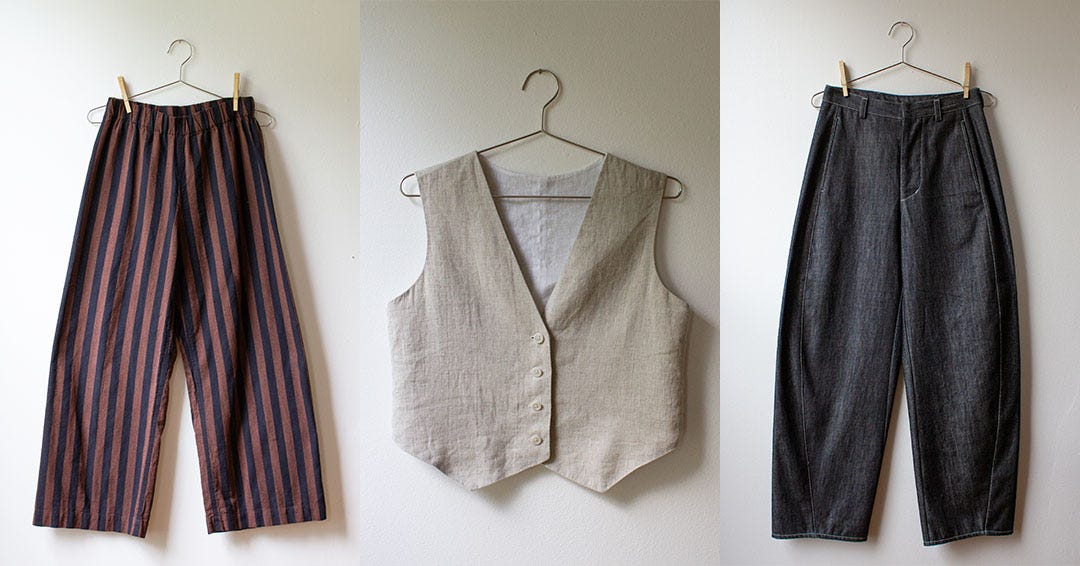
For the past few years, I've logged data on my sewing (and crochet) projects with increasing granularity. This year, I finally tracked dollars spent.
The numbers are certainly a reminder that having an art or craft practice isn’t cheap, but I wouldn’t say they’re particularly surprising. Mainly, I’m excited to have established a baseline for subsequent years’ spending.
Here’s the cost breakdown, two ways.
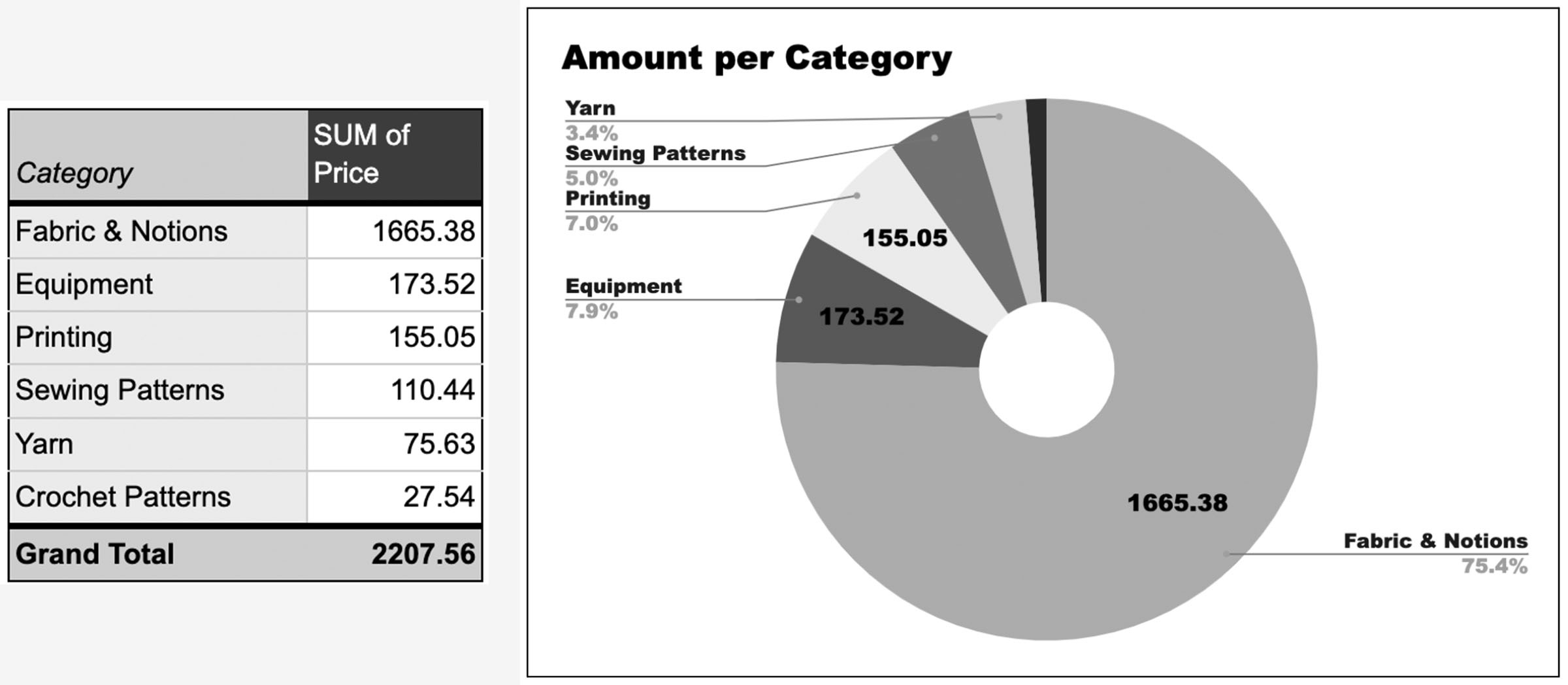
The grand total of dollars spent comes out to $183 per month. I find a monthly breakdown useful as I’m more apt to look at spending (and earning) in terms of months.
Data Limitations
Good data can be misinterpreted. For example, the “Fabric & Notions” amount — which is mostly fabric, to be fair — is a substantial slice of the pie. Upon first glance one might assume that I sewed $1665 worth of fabric and notions, but that’s incorrect. The materials purchased within a year don’t neatly correspond to the garments actually made. In November, I placed a sizable fabric order during the sales, and still had unused yardage from previous orders. I’m headed into next year with about 25 garments’ worth of fabric.
The same goes for patterns. I didn’t sew all purchased patterns, but sewed some more than once.
Savings Considerations
I don’t buy fabric locally as the options are severely limited, so I mainly source from a handful of online shops that offer free shipping for larger orders. These savings, along with ecological considerations, make bulk purchases preferable. The main issue here is that I’m forced to plan projects well in advance of actually sewing them. Inevitably, I lose enthusiasm for certain ideas, or new ones get prioritized in the backlog.
Printing PDF patterns is similar. With a lack of affordable A0 printing nearby, I order from an online service with savings contingent on multiple prints per purchase.
2025 Forecasting
My goal is to use a substantial portion of my fabric stash before restocking, so I expect this category to decrease in 2025. Ideally, I’ll slash this amount by at least 65%.
While I enjoy buying new patterns, I’m always searching for something foundational — a go-to, versatile design that I can make multiple times. This year, I discovered a few of said patterns which should result in less purchases next year. I also plan to try my hand at drafting, but more on that later!
I spent about $155 on printing PDF patterns; however, I also purchased a short throw projector which should greatly reduce next year’s printing expense. At $175, I figure it’ll essentially pay for itself in a year or so.
While it may seem like I’m on track to spend less in 2025, I do foresee a couple of equipment purchases that’ll likely negate any overall reduction.
Other Stats for the Curious
Below, see the category breakdown for sewing project categories, two ways. I made a total of 27 projects for a year-over-year increase of 35%. This is an average rate of 2.25 projects per month. For my schedule, a consistent output of 2-3 garments per month is a steady, sustainable pace that mitigates the risk of burnout.
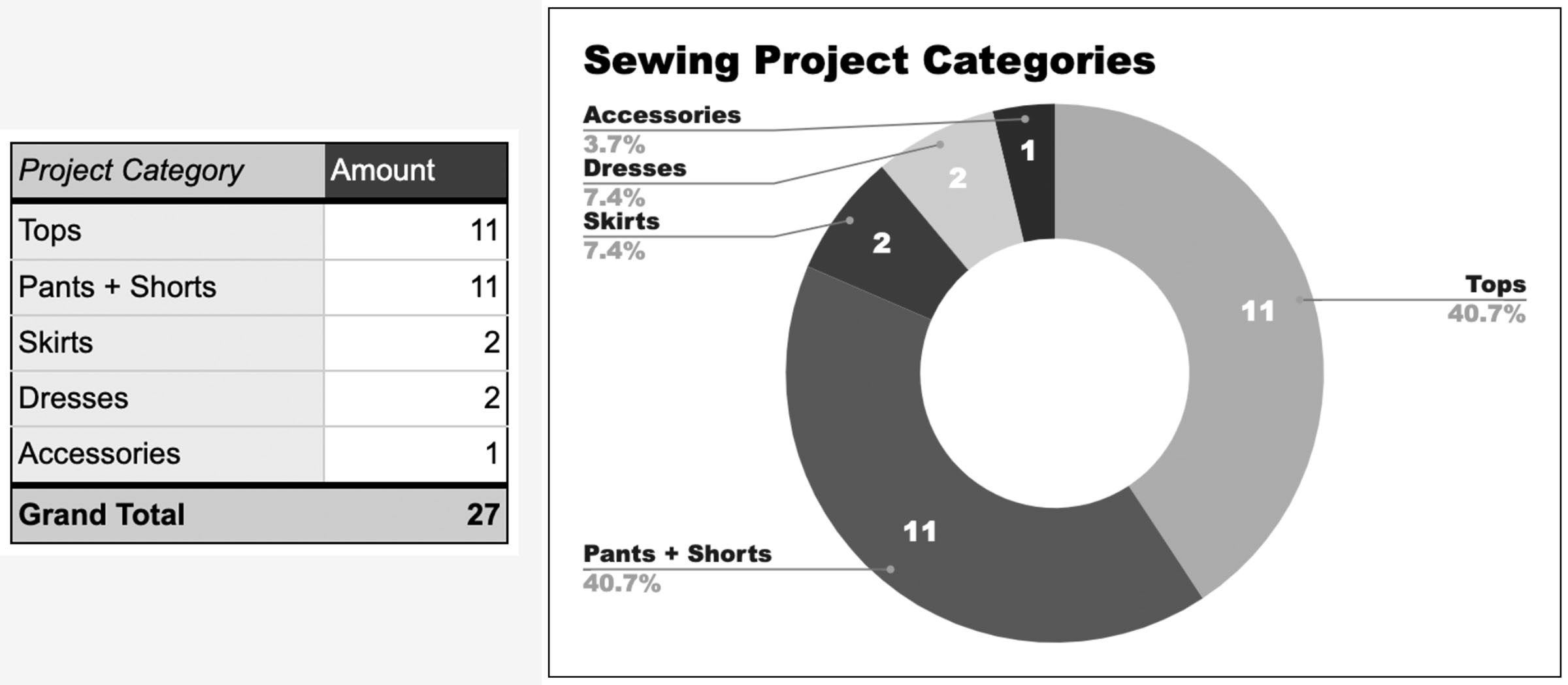
Evidently, I prefer pants to dresses and skirts (and don’t foresee this changing next year). One glaringly absent category is outerwear though. Top of the list for 2025 is a wool coat.
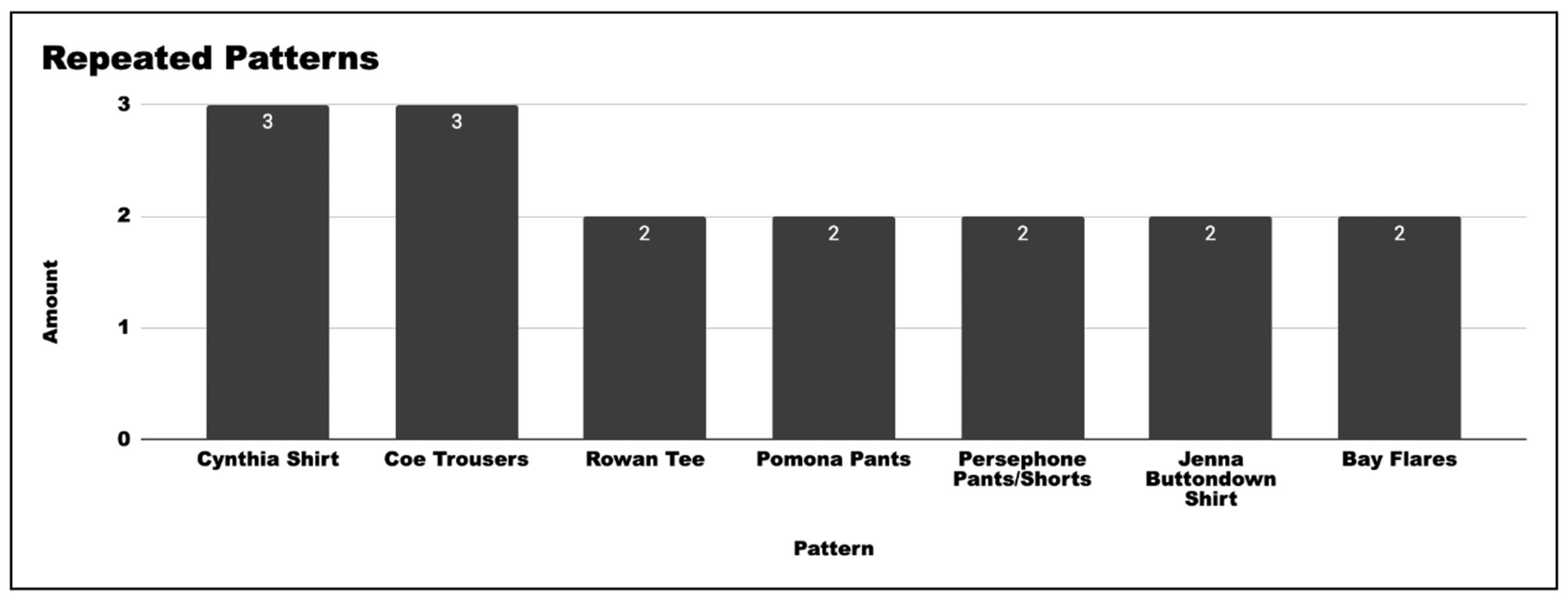
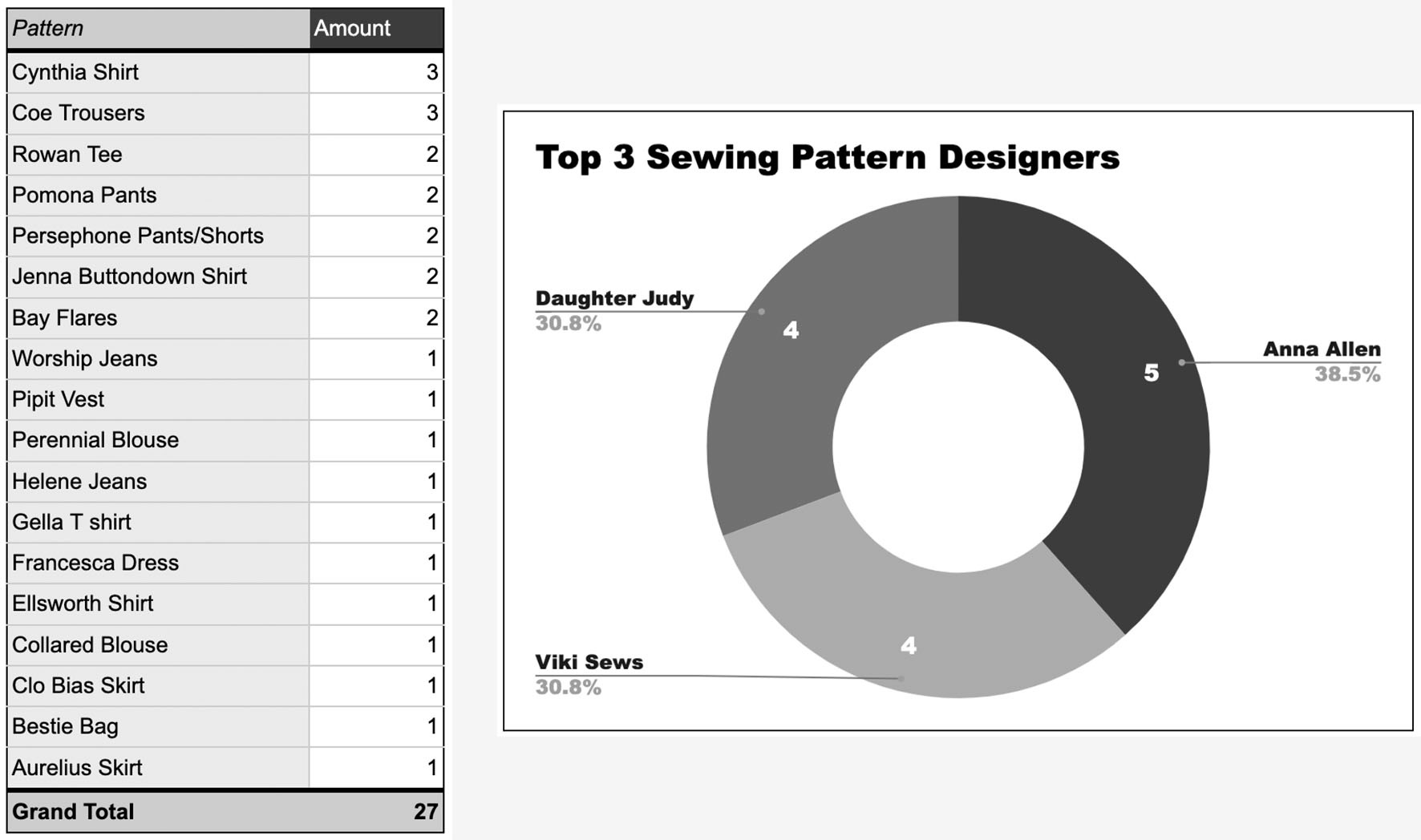
Of my 27 projects, I sewed a total of 18 different patterns. The top 3 pattern designers is based on the number of garments made from each, including repeats.
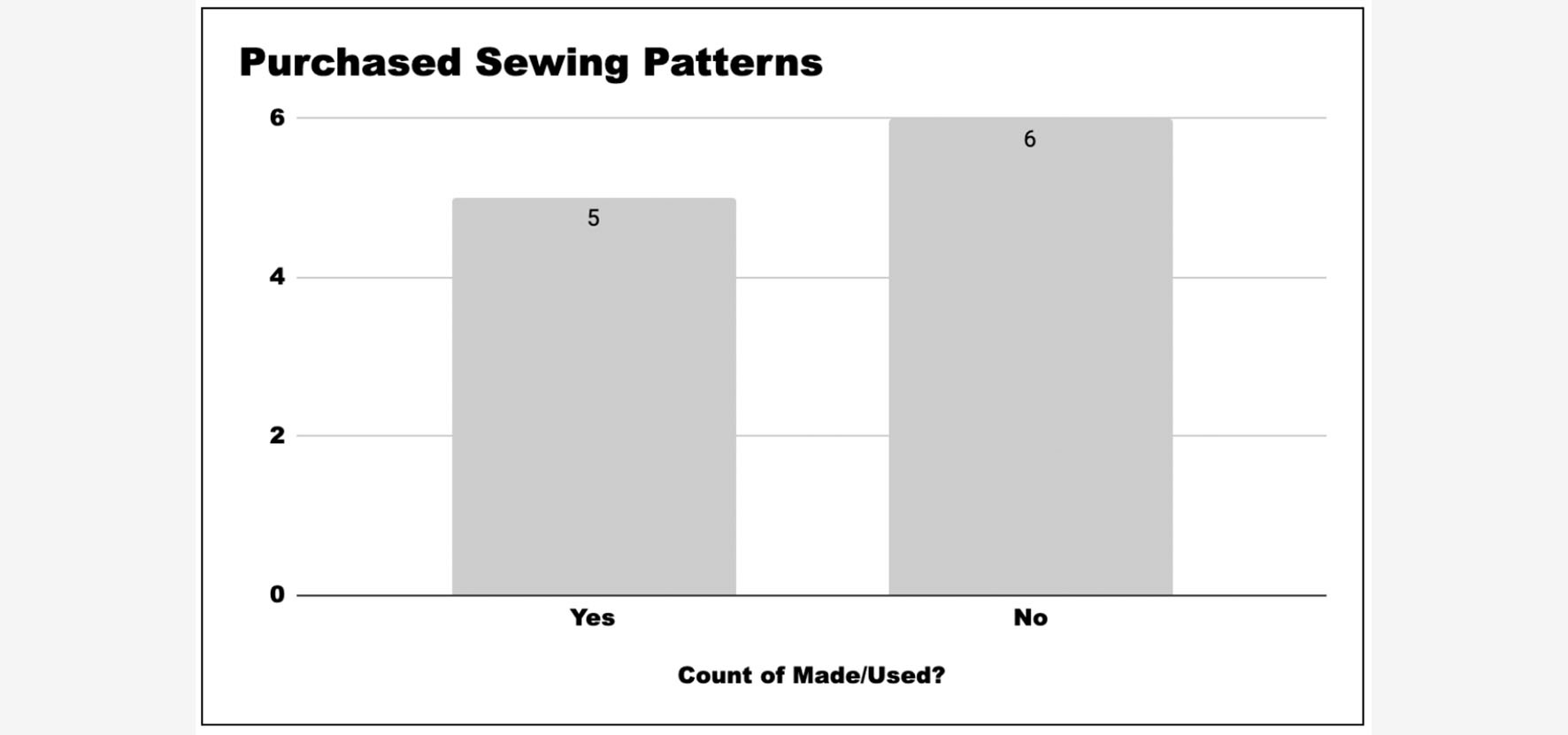
I purchased 11 patterns and made 5, which is a make rate of slightly less than 50%. Unmade patterns are a result of planning too far out — often related to ordering multiple A0 prints at once for the savings. Not included in the chart below are 3 patterns gifted for testing, for which my make rate is 100%.
Improving Metrics
Next year, I want to figure fabric and materials cost per garment since my yearly fabric purchases don’t necessarily align with garments made the same year. I’d also like to track time spent for at least a couple of projects. Seeing the materials and labor cost per garment will be especially illuminating. I expect it to be in the hundreds based on a fair labor rate alone, but how many hundreds is TBD.
Final Thoughts
Arts or crafts by no means have to be functional, but I certainly find satisfaction in the pragmatic nature of mine. Since I now make most of my wardrobe, my craft spending has offset money formerly spent on ready-to-wear clothes.
Sharing my stats this year was great for a couple of reasons: I enjoy providing useful information to a community whose collective knowledge I continuously learn from. Additionally, analyzing the data allowed for deeper insights than simply collecting it. It made me really consider what’s most useful and what’s missing. And as I continue to track, I look forward to the story that emerges from a year-over-year perspective.
Abbreviated analytics on Instagram here.
Really enjoyed reading this break down. I tried to track all the information up until May or so, but then lost steam.
I agree with the inspiration factor! Thanks for the details!